
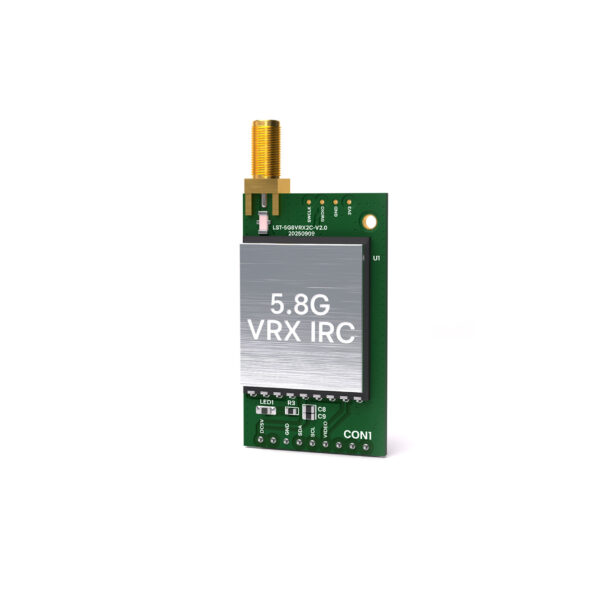
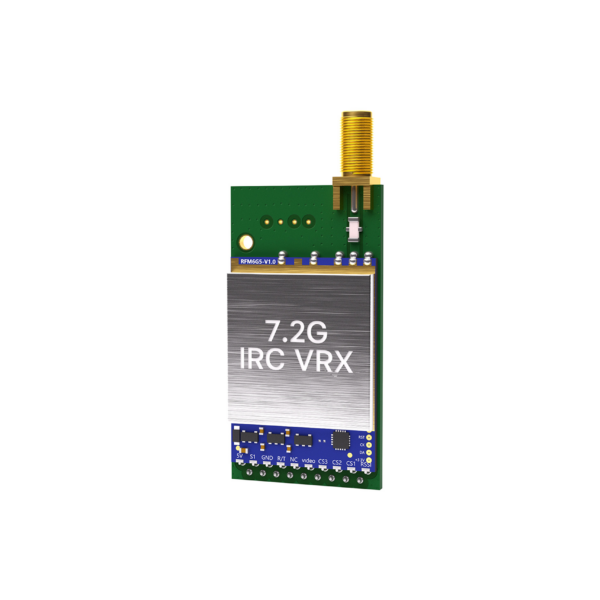
The VRX video receiver is responsible for receiving the video signal from the FPV transmitter and outputting it to goggles or a monitor. Before buying an FPV video receiver, it is important to pay attention to the compatible operating frequency range, sensitivity, number of channels, and antenna connectors.
How an FPV Video Receiver (VRX) Works
The video receiver captures the analog signal from the transmitter and broadcasts it to compatible display equipment. A complete video link is built along the following chain: FPV cameras generate the image, the video transmitter broadcasts it over the air, and the receiver captures the radio waves using an antenna. After processing, the analog signal is fed to the display or goggles (FPV camera → VTX → transmitter antenna → receiver antenna → VRX → FPV monitor).
If you plan to buy an FPV video receiver, determine the overall configuration of your onboard and ground components. A basic condition for operation is frequency matching. The receiver and analog video transmitter must operate on the exact same channel, as merely a similar band name does not guarantee compatibility.
Within the overall drone system, the receiver solely performs the function of receiving images. It should not be confused with control link receivers, ELRS modules, or telemetry equipment.
What to Look For When Choosing a VRX
Selecting a receiver is based on analyzing the technical specifications of a specific model. It is important to:
- check the matching of operating frequencies between the VRX and VTX;
- ensure the necessary channel grid is available;
- evaluate receiver sensitivity and permissible input voltage;
- consider support for control via I2C or VRX Dock;
- verify the antenna connector and methods of transmitting video to the screen.
Receiver parameters should be compared comprehensively, taking into account the characteristics of other system components.
Frequency Range, Channels, and VTX Compatibility
The specific frequency range determines the limits within which the module can receive an analog video signal. FT Systems models cover segments of 1080–1360 MHz, 2700–3000 MHz, 3170–3470 MHz, 4990–5945 MHz, and 6110–7210 MHz. Depending on the selected frequency, the receiver includes corresponding frequency bands.
FT VRX receivers are designed for 9, 16, 64, or 96 channels. For compatible operation, the VTX must support the channel frequencies available on the specific receiver.
Additionally, the receivers are equipped with band-pass filters to cut off interference. For example, in the 1.2GHz model, the filter operates within 1140–4240 MHz, and in the 5.8GHz model — 4700–6000 MHz. This helps reduce the impact of extraneous radio emissions.
Sensitivity, Power Supply, and Control Interface
The sensitivity rating determines the module’s ability to recognize a weak signal. For FT Systems models, this parameter is -95 dBm (with a tolerance of ±2 dBm). Thanks to this, the receiver can effectively detect low signal levels.
Reception quality and video link range are affected by a combination of factors:
- antenna characteristics;
- placement of components within the build;
- airwave congestion;
- signal propagation conditions.
No single parameter guarantees a stable signal under all conditions.
All FT VRX modules have a permissible input voltage of 4.5–5.5 V, and current consumption ranges from 0.18 to 0.45 A. Control is performed exclusively via I2C from a compatible microcontroller with custom software or via the FT VRX Dock. Before buying a VRX video receiver, ensure an appropriate control method is available.
Antenna, Dock Station, and Monitor Connection
A video antenna is required for operation. All FT Systems receivers feature an SMA Female antenna connector (straight or right-angle) to which omnidirectional video antennas or directional antennas are connected. It is crucial that the antenna polarization on the receiver and transmitter match. The received video signal can be viewed through FPV monitors, a case monitor, or FPV goggles.
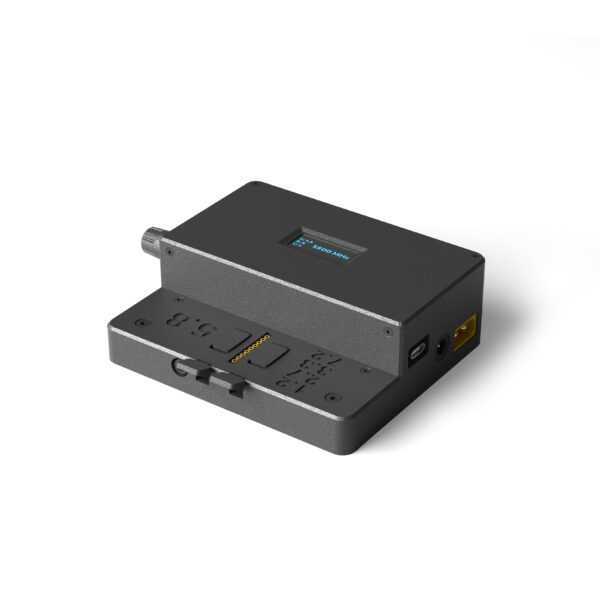
The compatible FT VRX video receiver dock station serves as a base for mounting the receiver and simplifies its connection. It provides power, channel control, and an analog video output connection. The dock station is compatible with 1.2GHz, 2.7GHz, 3.3GHz, 5.8GHz, and 7.2GHz modules. It is powered by 5.5–32 V (2–8S) via an XT60 or DC Jack and features a 0.91″ OLED display and a rotary push encoder. The analog video output is implemented via a 3.5mm Mini-Jack.
The VRX module and dock station are purchased separately, so check the compatibility of the specific module with the dock station before ordering.
FT Systems Video Receivers
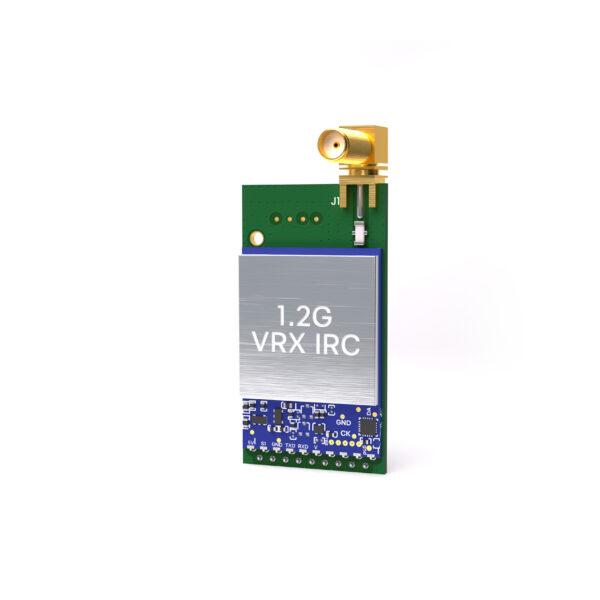
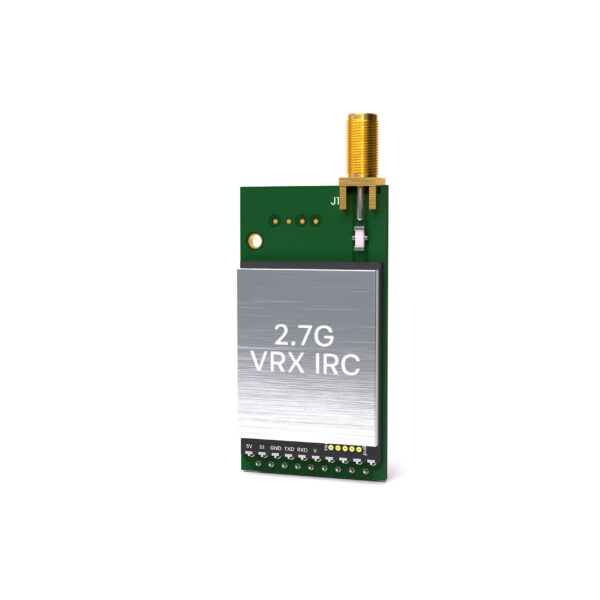
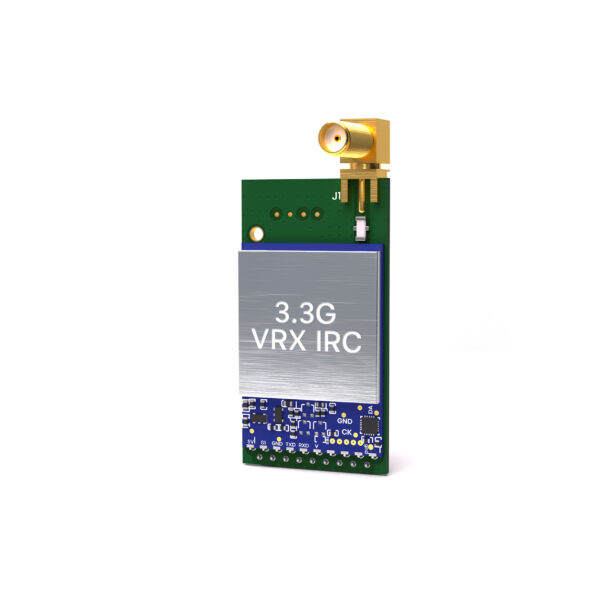
The FT Systems video receiver lineup covers modules for various frequency ranges (1.2GHz with 9CH, 2.7GHz and 3.3GHz with 16CH, 5.8GHz with 96CH, and 7.2GHz with 64CH), allowing you to choose the optimal solution for your desired use cases.
All FT VRX modules are built to a unified standard: they feature a compact casing (58 × 27 × 25 mm), -95 dBm (±2 dBm) sensitivity, 50 Ohm input impedance, a standard SMA Female antenna connector, and are controlled via an I2C interface. The receivers are powered by 4.5–5.5 V and are designed for severe operating conditions in a temperature range from -20 to +75 °C.
During assembly, be sure to check the frequency and channel compatibility of the selected VTX/VRX pair. Although the VRX does not require active cooling, it is necessary to provide space for free air circulation during installation.
Buy an FPV Video Receiver from FT Systems
With us, you can select not only a VRX but also VTX video transmitters and other components: cameras, antennas, FPV monitors, and dock stations. Get the entire set of necessary components with fast delivery across Ukraine.
The experts at FT Systems support will consult you on power, operating frequencies, power supply, and connector compatibility. Our team is always in touch and ready to provide professional advice.
If you plan to buy video receivers for FPV drones, the current price and availability can be found on the product page. A discount system applies to wholesale orders.

