
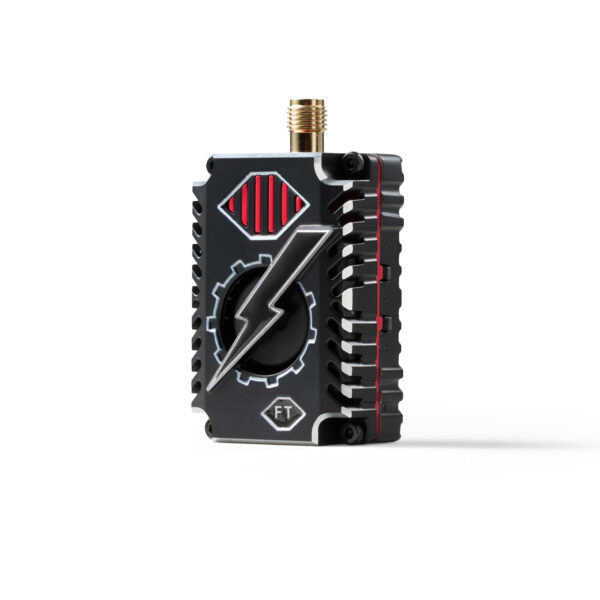
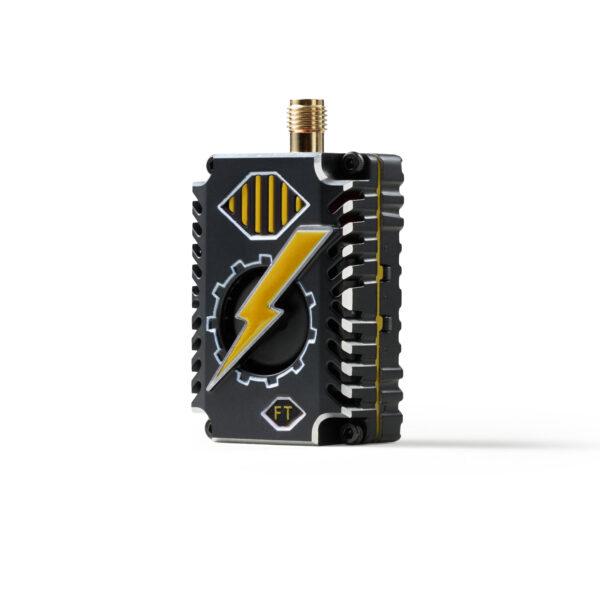
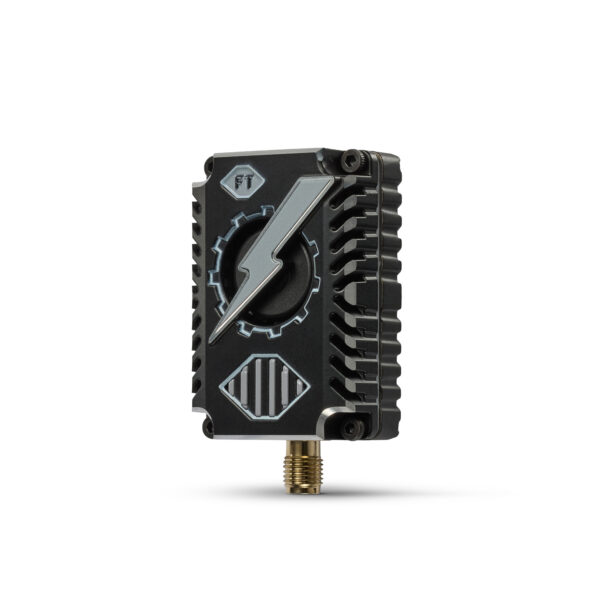
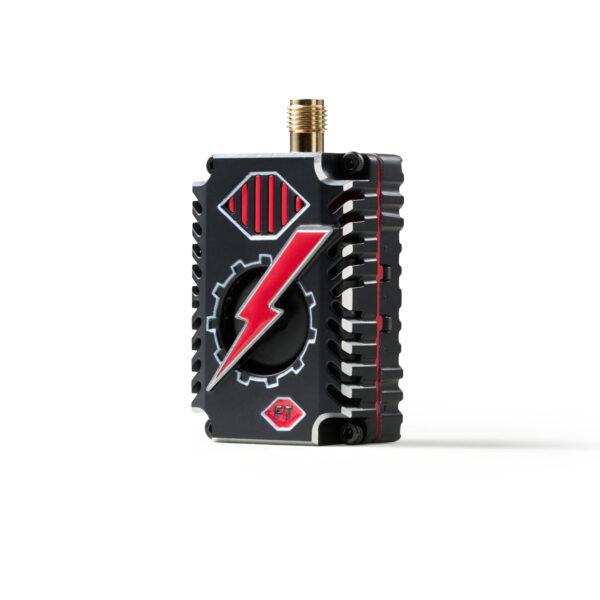
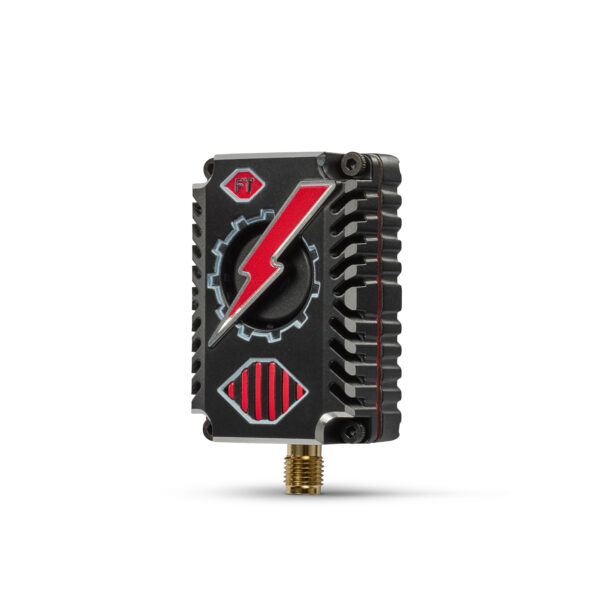
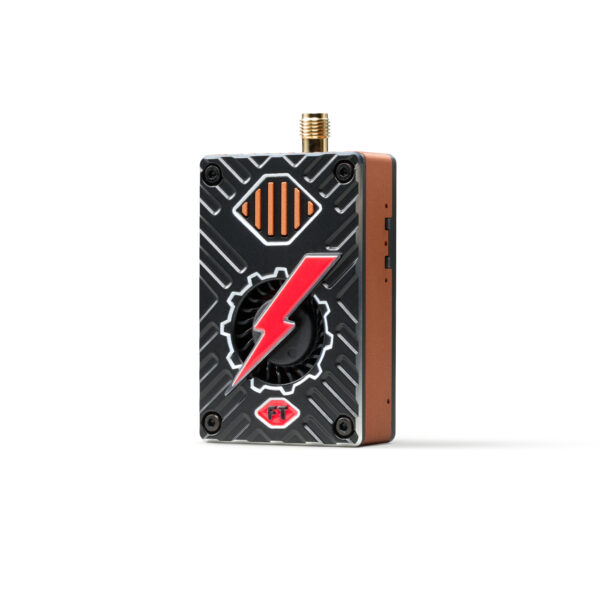
The VTX video transmitter is responsible for transmitting the video signal from the FPV camera to the video receiver. If you plan to buy an FPV video transmitter, you should first determine the compatible frequency, power, channels, power supply, and antenna connection parameters.
How an FPV Video Transmitter (VTX) Works
A video transmitter for an FPV drone is a system component that transmits the video signal from the camera to the ground receiving equipment.
In a typical FPV video link setup, the FPV camera generates a video signal and transmits it to the VTX. The transmitter converts the signal into a radio wave, which is emitted through the antenna. A compatible VRX captures the radio wave and outputs the image to the FPV monitor.
Diagram: FPV camera → VTX → transmitter antenna → receiver antenna → VRX → FPV monitor.
For all elements to work correctly, you need to consider the operating frequency range, supported channels, power, input voltage, and compatibility with the VRX.
What to Look For When Choosing a VTX
When choosing a transmitter, you should consider not only the characteristics of the FPV system itself but also the conditions in which it will operate: the number of obstacles, and how congested and noisy the airwaves are.
Key parameters to check before buying:
- frequency range and available channels;
- output power and available adjustment modes;
- permissible input voltage of the power system;
- antenna connection type;
- cooling type;
- mounting holes, dimensions, and weight of the transmitter.
If you need to buy a VTX video transmitter, these parameters should be compared not in isolation, but taking into account the characteristics of the already installed components.
VTX Compatibility with Video Receiver, Camera, and Antenna
A mandatory step is checking compatibility with the VRX. Transmitters and VRX video receivers must support a common frequency range and identical operating channels for correct signal reception.
If you plan to buy a video transmitter for FPV drones, you must choose an appropriate antenna for the video link. It is selected based on the frequency, connector type, and antenna polarization.
FT VTX video transmitters are equipped with an SMA Female connector, so the antenna must have a corresponding SMA Male for connection. Builds use either omnidirectional video antennas or directional antennas.
The transmitter receives the video signal from the FPV camera, so when selecting one, you should consider connection compatibility and camera parameters for specific shooting conditions.
Video Transmitter Frequency, Power, and Channels
Frequency determines the section of the radio spectrum in which the transmitter operates. In the presented models, the frequency range covers segments from 1080 to 8500 MHz, so before choosing, it is necessary to match the VTX and VRX parameters.
The number of available channels also varies by model: the category features options from 9 to 176 channels (from 1 to 22 frequency bands).
Power affects signal transmission parameters, but it is not the only factor that determines video link range. Reception quality is also influenced by:
- antenna characteristics;
- VRX sensitivity;
- placement of the VTX relative to other components that can act as sources of electromagnetic interference;
- airwave congestion, radio noise, and signal propagation conditions.
Different models offer modes from 0 mW to 4000 or 5000 mW (actual output power may have slight deviations depending on the frequency).
VTX Power, Control, and Cooling
It is necessary to verify the permissible input voltage of the VTX with the parameters of the drone’s power system, as a mismatch can cause unstable operation, overheating, or damage to the transmitter. The presented models require a minimum input voltage from 7 to 15 V, with a maximum permissible voltage of 36 V.
Transmitter parameters in the presented models are controlled via IRC Tramp. This protocol allows you to change available video transmitter settings through the flight controller, without the need to switch parameters on the device itself.
The transmitters also support Pit Mode. This mode is designed for low-power operation during system setup or testing.
A separate factor is active cooling. When operating at high power, the VTX heats up, so heat dissipation is carried out through an aluminum heatsink and a fan. During installation, it is necessary to leave room for airflow.
FT Systems Video Transmitters
FT Systems video transmitters for FPV drones are represented by models with various frequency ranges (from 1.2 GHz to 8.5 GHz), number of channels, and power modes.
All presented devices support multiple power levels, Pit Mode, and the IRC Tramp control protocol. The models are also equipped with an SMA Female connector for connecting a compatible antenna and an active cooling system with an aluminum heatsink and a fan.
Buy an FPV Video Transmitter from FT Systems
With us, you can select not only a VTX but also other components for building an FPV video link: cameras, VRX video receivers, antennas, and FPV monitors.
If you have any questions during the selection process, the FT Systems support team is always in touch and ready to consult in detail on any nuances: from power, frequencies, and power supply to choosing connectors and checking compatibility.
If you plan to buy an FPV video transmitter, the current price and availability of each model are indicated on its product page. A discount system applies to wholesale orders.
Order the VTX and all FPV video link components in a single order with delivery across Ukraine to get a complete setup all at once.

